
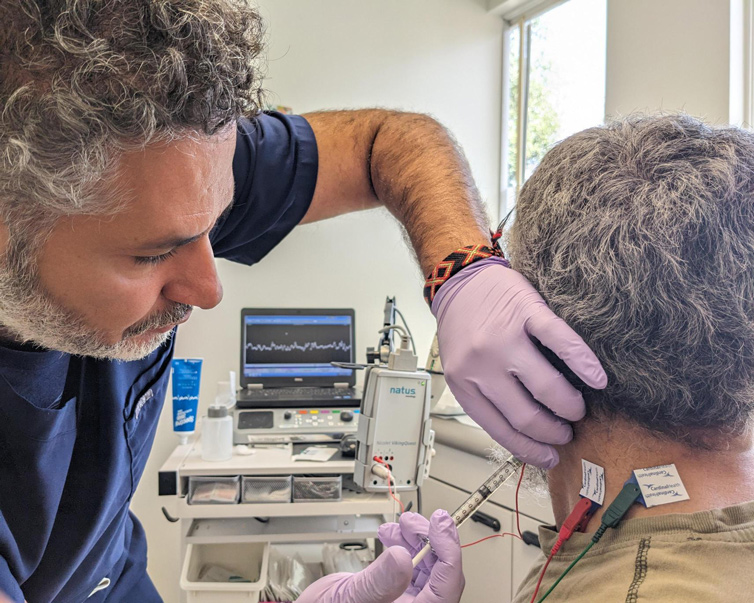
Botox Therapy for Neurological Conditions
Botox (Botulinum toxin) is not just used cosmetically but also plays a vital role in treating many neurological disorders. It works by relaxing overactive muscles or blocking pain signals, providing long-term relief in conditions like cervical dystonia, hemifacial spasm, blepharospasm, and chronic migraine. For patients with spasticity due to stroke, cerebral palsy, or multiple sclerosis, Botox injections improve mobility, reduce stiffness, and enhance quality of life. At DoctorsVibe, Botox therapy is performed with precision, ensuring safety, comfort, and effective outcomes tailored to each patient’s needs.
Frequently Asked Questions (FAQs)
Dystonia, hemifacial spasm, blepharospasm, chronic migraine, spasticity, and tremors.
Botox blocks pain signals and reduces the frequency of migraine attacks.
Yes, when given by trained specialists, it is safe and effective.e.
Results typically last 3–6 months, after which repeat treatment may be needed.
Botox only targets overactive muscles at the injection site, minimizing unwanted effects.