
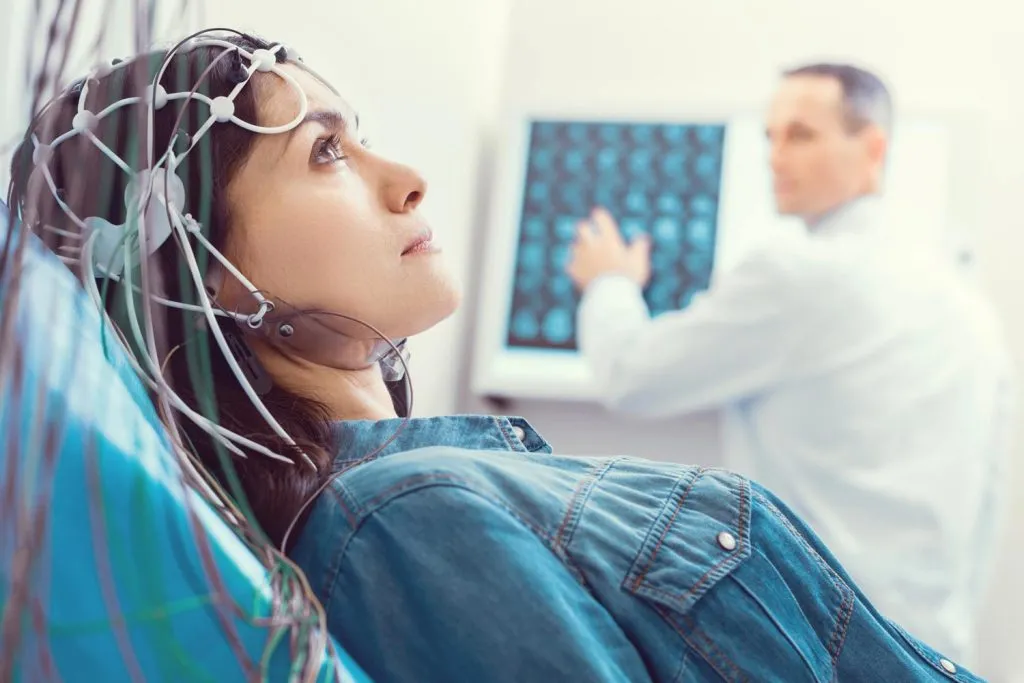
EEG & Neurophysiology
Electroencephalography (EEG) and neurophysiology studies are essential tools in understanding the brain and nerve function. EEG records the brain’s electrical activity, helping in the diagnosis of epilepsy, seizure disorders, sleep disturbances, and unexplained episodes of unconsciousness. Neurophysiology also includes nerve conduction studies (NCS) and electromyography (EMG), which evaluate the function of peripheral nerves and muscles, detecting conditions like neuropathy, myopathy, or nerve compression. At DoctorsVibe, these tests are performed using advanced technology to provide accurate results, guiding effective treatment and better patient care.
Frequently Asked Questions (FAQs)
To measure brain activity and detect epilepsy, seizures, or abnormal brain function.
Small electrodes are placed on the scalp to record electrical signals from the brain.
Tests that measure how well signals travel through the nerves to detect nerve damage or compression.
EEG is painless, while EMG may cause mild discomfort due to small needle insertions.
When experiencing seizures, unexplained weakness, muscle wasting, numbness, or nerve-related issues.